

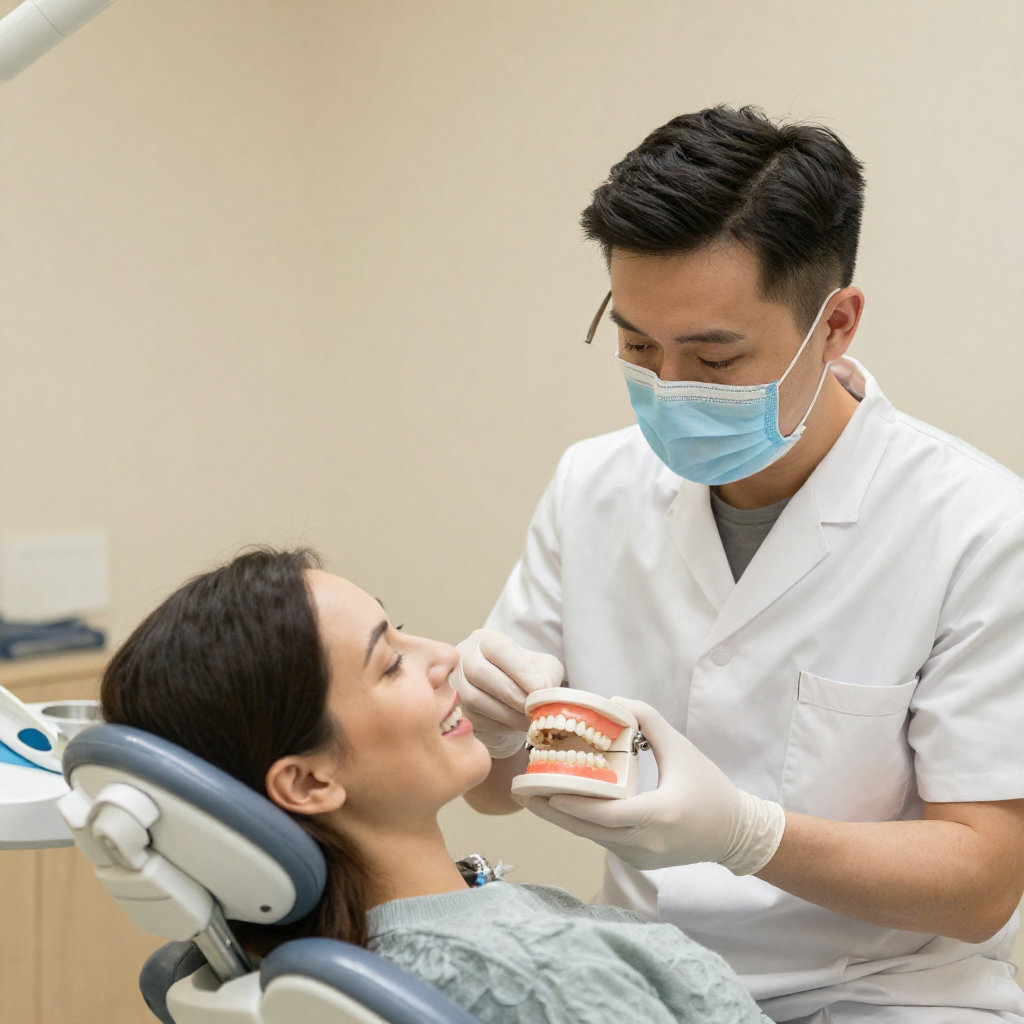
Dental implants for false teeth can give loose or uncomfortable dentures a more secure foundation by attaching replacement teeth to implants placed in the jawbone. For many patients, this can mean better chewing strength, improved comfort, clearer speech and more confidence compared with traditional removable dentures. The right option may be removable implant-retained dentures, fixed teeth on implants, or another tooth replacement plan depending on your bone health, oral health, budget and goals.
At Murraylands Dental Care, we help patients in Murray Bridge and the surrounding Murraylands region understand their options clearly before starting treatment. In this guide, we explain how implants can replace dentures, what the procedure involves, how implant-supported dentures differ from traditional false teeth, what affects cost in Australia and what to ask before booking treatment.
Quick Answers About Dental Implants for False Teeth
Can dental implants replace dentures?
Yes. Dental implants can be used to replace loose dentures or make dentures more stable. Depending on your needs, implants may support a removable denture that clips into place or a fixed bridge of teeth that stays in the mouth.
Are implant-supported dentures permanent?
Some implant-supported dentures are removable, while others are fixed. Removable implant-retained dentures can be taken out for cleaning. Fixed teeth on implants are attached to the implants and are usually only removed by a dentist.
How many implants are needed for false teeth?
The number varies. Some lower dentures may be stabilised with two implants, while full-arch fixed teeth may need four or more implants. Bone levels, bite strength, jaw shape and the type of final teeth all affect the plan.
How much does implant-supported dentures cost Australia-wide?
Implant supported dentures cost Australia patients more than standard dentures because treatment includes surgery, implant components and a custom prosthesis. Publicly available Australian clinic guides list implant-supported dentures from around $8,000 to $15,000 in some cases, while more complex single-arch or full-mouth implant treatment can range much higher depending on the design and number of implants.
Are implants better than dentures?
Implants are not automatically better for every patient, but they can be a strong option for people who struggle with slipping dentures, sore gums or reduced chewing confidence. The Australian Dental Association explains that dental implants can replace more than one tooth at a time, including through implant bridges or implant-supported dentures.
What Are Dental Implants for False Teeth?
Dental implants for false teeth use small posts, usually made from titanium, as anchors for replacement teeth. These implants are placed into the jawbone, where the bone gradually heals around them. Once stable, they can support a denture, bridge or full set of teeth.
A traditional denture rests on the gums. It may rely on suction, shape, adhesive or clasps for support. An implant-supported denture is different because the denture connects to implants in the jaw. This extra support can help reduce movement when eating, talking or laughing.
Healthdirect explains that a dental implant can support a crown, dental bridge or dentures, and that more than one appointment is needed to prepare and fit an implant.
For patients who have worn full dentures for years, the difference can feel significant. Instead of worrying that a lower denture will lift while eating, or that an upper denture will affect taste and speech, implants may provide a more stable base for replacement teeth.
Why Do Denture Wearers Consider Implants?
Many patients start asking about implants to replace dentures because their current false teeth no longer feel comfortable or reliable. Dentures can be helpful and affordable, but they may become loose over time as the jawbone and gums change shape.
Common reasons patients ask us about implant-supported dentures include:
- Lower dentures moving while eating
- Sore spots from denture rubbing
- Difficulty chewing steak, apples, nuts or crusty bread
- Embarrassment when dentures move during speech
- A bulky upper denture covering the palate
- Regular use of denture adhesive
- Loss of confidence in social situations
- Dentures that feel unstable despite adjustments
At our implant dentistry clinic in Murray Bridge, we offer implant-retained dentures as one option for patients who want improved comfort and security. Murraylands Dental Care also provides implant placement, single tooth implants and implant-supported bridges for different tooth replacement needs.
Dentures vs Dental Implants Comparison
Patients often ask for a simple dentures vs dental implants comparison. The answer depends on your mouth, health and budget, but the table below gives a practical overview.
| Feature | Traditional Dentures | Implant-Supported Dentures | Fixed Teeth on Implants |
| Stability | Can move, especially lower dentures | Clips onto implants for better hold | Fixed to implants, very stable |
| Cleaning | Removed daily | Usually removed daily, depending on design | Cleaned in the mouth with special tools |
| Chewing | Often reduced compared with natural teeth | Usually stronger than standard dentures | Often closest to fixed natural-feeling teeth |
| Comfort | May rub or feel bulky | Often less movement and irritation | Less bulky in many full-arch designs |
| Cost | Usually lower upfront | Higher than standard dentures | Usually higher again |
| Surgery | No implant surgery | Requires implant placement | Requires implant placement |
| Bone support | Does not anchor into bone | Implants stimulate bone in implant areas | Implants stimulate bone in implant areas |
| Maintenance | Relines, repairs, replacement | Denture clips and parts may need maintenance | Bridge screws, gums and hygiene need review |
Short answer: which is better?
If you want the lowest upfront cost, traditional dentures may suit you. If you want better denture stability, implant-retained dentures may be a strong middle ground. If you want teeth that stay fixed in place, fixed teeth on implants may be the closest alternative to natural teeth, but they are usually more complex and costly.
What Types of Implant Options Can Replace Dentures?
There is no single treatment called “implants for false teeth”. The phrase can describe several options.
1. Implant-Retained Dentures
Implant-retained dentures clip onto implants. They are still removable, but the implants help hold them in place.
This option may suit patients who:
- Already wear full dentures
- Have loose lower dentures
- Want better stability without fixed full-arch teeth
- Prefer being able to remove the denture for cleaning
- Want an option that may cost less than fixed full-arch implant teeth
A common example is a lower overdenture that clips onto two or more implants. Some upper dentures may need more implants because the upper jawbone is often softer and the forces are different.
2. Implant-Supported Dentures
People often use “implant-supported dentures” and “implant-retained dentures” interchangeably. In simple terms, both involve dentures connected to implants.
Some dentists use “implant-supported” to mean the denture receives more of its chewing support from implants, while “implant-retained” may mean the implants mainly help with grip and stability. The exact design should be explained during your consultation.
3. Fixed Teeth on Implants
Fixed teeth on implants are not removed daily like standard dentures. A full-arch bridge is attached to multiple implants and stays in place while you eat, speak and sleep.
This option may suit patients who:
- Want teeth that feel more secure than removable dentures
- Do not want to remove teeth at night
- Have enough bone or are suitable for grafting
- Can commit to careful cleaning around the bridge
- Understand the higher cost and maintenance needs
4. Implant-Supported Bridges
If you are missing several teeth but not a full arch, implants may support a bridge. Murraylands Dental Care offers implant-supported bridges for multiple missing teeth, and unlike traditional bridges, they do not rely on neighbouring teeth for support.
Fixed Teeth on Implants Procedure: What Happens?
The fixed teeth on implants procedure usually involves several stages. Some patients may receive temporary teeth soon after surgery, while others need a longer healing period before the final teeth are attached.
Step 1: Consultation and Oral Health Assessment
We begin by checking your gums, jawbone, bite, denture history and general health. We ask what bothers you most about your current dentures and what you want from treatment.
For example, one patient may mainly want a lower denture that does not lift while eating. Another may want to replace both upper and lower dentures with fixed teeth. These are different goals, and they need different plans.
Step 2: X-rays, Scans and Treatment Planning
Implant planning often needs X-rays or 3D imaging. Healthdirect notes that dental implant treatment usually starts with X-rays to give the dental professional a clear picture of the jaw and where to place the implant.
Planning may assess:
- Bone height
- Bone width
- Sinus position
- Nerve position
- Gum thickness
- Bite forces
- Denture fit
- Smile line
- Jaw relationship
This stage helps us explain whether implants are suitable, how many may be needed and whether bone grafting should be considered.
Step 3: Any Preparatory Treatment
Some patients need treatment before implant placement. This may include removing failing teeth, treating gum disease, adjusting old dentures or planning temporary teeth.
Possible preparatory steps include:
- Tooth extraction
- Gum disease treatment
- Bone grafting
- Denture reline
- Temporary denture design
- Medical clearance for some health conditions
Step 4: Implant Placement
Implants are placed into the jawbone under local anaesthetic. Some patients may also discuss sedation or general anaesthesia for more complex procedures. Murraylands Dental Care notes that sedation options may be available for complex dental treatments such as implant placement.
Step 5: Healing and Osseointegration
After placement, the bone needs time to heal around the implant. The ADA explains that the jawbone grows around the implant screw to hold it securely, and this takes approximately three months.
During this stage, you may wear a modified denture or temporary teeth, depending on your case.
Step 6: Attaching the Denture or Fixed Teeth
Once the implants are ready, the final teeth are attached. This may involve a removable denture that clips onto implant attachments or a fixed bridge secured to the implants.
Step 7: Maintenance and Reviews
Implant teeth need regular maintenance. Even though implants cannot get tooth decay, the gums and bone around them can become inflamed if cleaning is poor. Your dentist will show you how to clean around the implants, attachments and prosthesis.
Implant Supported Dentures Cost Australia: What Affects the Price?
Implant supported dentures cost Australia patients differently because every case has different requirements. A patient needing two lower implants and a removable denture will not have the same fee as someone needing upper and lower fixed full-arch teeth.
Main factors that affect cost
| Cost Factor | Why It Matters |
| Number of implants | More implants usually means higher surgical and component costs |
| Upper or lower jaw | Upper jaws may need different planning due to bone quality and sinus location |
| Removable or fixed teeth | Fixed teeth usually involve more materials, planning and laboratory work |
| Bone grafting | Adds surgical time, materials and healing stages |
| Tooth removal | Extractions may be required before implant placement |
| Temporary teeth | Some patients need temporary dentures or provisional fixed teeth |
| Implant system | Implant brand, parts and restorative options affect cost |
| Denture material | Acrylic, reinforced acrylic, metal framework and other materials vary |
| Sedation | Local anaesthetic costs less than sedation or general anaesthesia |
| Maintenance | Clips, inserts, screws and prosthetic parts may need replacement over time |
What price range should patients expect?
Public Australian clinic pages show wide variation. One competitor page lists implant-supported dentures from $8,000 to $15,000, while another lists implant-supported overdentures from $12,000. A different Australian dental clinic guide states that a single-arch implant-supported denture may range from $10,000 to $25,000, with full-mouth reconstruction potentially exceeding $50,000.
These numbers are useful as broad context, but they are not a substitute for an individual consultation. A proper quote should explain what is included and what is not included.
What Should Be Included in an Implant Denture Quote?
Before comparing prices, ask whether your quote includes the whole journey or only part of it.
A detailed quote may include:
- Consultation
- Dental examination
- X-rays or 3D scan
- Tooth removal if needed
- Bone grafting if needed
- Implant placement
- Implant components
- Healing caps or attachments
- Temporary denture adjustments
- Final denture or fixed bridge
- Laboratory fees
- Review appointments
- Maintenance instructions
- Sedation fees if relevant
A low advertised price may not include scans, grafting, sedation, temporary teeth or the final prosthesis. This is why itemised treatment plans are important.
Who Is a Good Candidate for Implants to Replace Dentures?
A good candidate for implants to replace dentures usually has healthy gums, enough jawbone, good oral hygiene and general health that supports healing. However, some patients who are not suitable immediately may become suitable after preparation.
You may be suitable if you:
- Are missing most or all teeth in one or both jaws
- Struggle with loose dentures
- Want better chewing stability
- Have enough jawbone for implants
- Are willing to attend maintenance appointments
- Do not smoke, or are willing to stop
- Have controlled medical conditions
- Can clean carefully around implants and prosthetic teeth
You may need extra assessment if you:
- Smoke
- Have untreated gum disease
- Have uncontrolled diabetes
- Take certain medications affecting bone healing
- Have had radiation therapy to the jaws
- Grind or clench heavily
- Have significant bone loss
- Have worn dentures for many years
The ADA notes that not all people are able to get a dental implant, and that alternatives to dental implants include dentures and dental bridges.
What Are the Benefits of Dental Implants for False Teeth?
Better denture stability
Implants can help stop dentures from lifting, rocking or sliding. This can be especially helpful for lower dentures, which often have less suction than upper dentures.
Improved chewing confidence
Many patients choose implants because they want to eat more comfortably. Implant support may make it easier to chew foods that are difficult with loose dentures.
Clearer speech for some patients
Loose dentures can click, shift or affect pronunciation. More stable replacement teeth may help speech feel more natural.
Less reliance on denture adhesive
Some patients use adhesive daily to hold dentures in place. Implant-retained dentures may reduce or remove that need, depending on the design.
More natural feel
Fixed teeth on implants may feel less bulky than traditional dentures, especially if the upper palate can be left uncovered. This depends on your anatomy and treatment plan.
Support for facial appearance
Replacement teeth can support the lips and cheeks. CDIC’s implant-retained denture page also notes that dentures can help support facial aesthetics by supporting the lips and cheeks from underneath.
What Are the Risks and Downsides?
Dental implants can be very helpful, but they are not risk-free. It is important to make an informed decision.
Possible risks and downsides include:
- Surgical discomfort
- Swelling or bruising
- Infection
- Implant failure
- Gum inflammation around implants
- Bone loss around implants
- Nerve or sinus complications in some cases
- Higher upfront cost than standard dentures
- Need for ongoing cleaning and maintenance
- Replacement of clips, inserts or denture parts over time
Healthdirect lists possible dental implant complications including infection, nerve damage, sinus problems and damage to surrounding teeth.
This does not mean implants are unsafe. It means your dentist should assess your suitability carefully, explain alternatives and provide clear aftercare.
How Long Do Implant-Supported Dentures Last?
Implants can last many years with good care, but the denture or bridge attached to them may need maintenance or replacement earlier. The lifespan depends on hygiene, bite force, material choice, smoking, gum health and regular professional care.
Murraylands Dental Care notes that dental implants can last for decades with proper oral hygiene, while the crown attached to an implant may need replacement after normal wear and tear.
For implant-retained dentures, parts such as clips, locator inserts or attachments can wear and need replacement. This is normal maintenance, not necessarily a failure.
How Do You Clean Dental Implants and False Teeth?
Cleaning depends on whether your teeth are removable or fixed.
Cleaning removable implant-retained dentures
You may need to:
- Remove the denture daily
- Brush the denture gently
- Clean around implant attachments
- Use recommended interdental brushes
- Keep gums clean
- Store the denture as instructed
- Attend regular reviews
Cleaning fixed teeth on implants
You may need to:
- Brush around the bridge carefully
- Use floss threaders, super floss or interdental brushes
- Use a water flosser if recommended
- Clean under the bridge
- Attend hygiene visits
- Have screws and bite checked regularly
Good maintenance protects the gums and bone around the implants.
Can Existing Dentures Be Attached to Implants?
Sometimes an existing denture can be modified, but often a new denture is recommended. It depends on the denture’s fit, bite, wear, tooth position, material strength and whether it can safely connect to implant attachments.
If the denture is old, worn or poorly fitting, attaching it to implants may not produce a good result. In many cases, the best outcome comes from planning the implants and the new teeth together.
Can I Sleep With Implant-Supported Dentures?
For removable implant-retained dentures, many dentists recommend removing them at night so the gums can rest and the denture can be cleaned. Fixed implant teeth stay in the mouth overnight.
Your dentist will give instructions based on your denture design, gum health and risk factors.
Is the Treatment Painful?
Implant placement is usually done under local anaesthetic, so you should not feel pain during the procedure. Some swelling, tenderness or bruising afterward is normal.
For anxious patients or longer procedures, sedation may be discussed. At Murraylands Dental Care, we focus on a calm and supportive experience, and our clinic describes a personalised approach with modern technology and a stress-free environment.
How Long Does the Whole Process Take?
Many implant denture cases take several months from planning to final teeth. Murraylands Dental Care’s implant dentistry page notes that the entire implant process typically takes three to six months, including placement, healing and fitting of the final restoration, although timing varies by patient.
Treatment may take longer if you need:
- Extractions
- Bone grafting
- Gum disease treatment
- Healing before implant placement
- A staged upper and lower arch plan
- A complex fixed full-arch restoration
Payment Options for Implant Dentures
Implant-supported dentures and fixed implant teeth are a significant investment. Murraylands Dental Care offers flexible payment solutions including Denticare, ZipMoney and Afterpay. The payment plans page also notes Denticare contracts can be paid over 24 months, and that compassionate release of superannuation may apply for essential dental treatment under the ATO program in eligible circumstances.
Payment options do not change what treatment is clinically needed, but they may help eligible patients plan their care more comfortably.
Real-World Treatment Examples
Example 1: Loose lower denture
A patient has worn full dentures for eight years. The upper denture is acceptable, but the lower denture lifts when eating. After assessment, the patient may be suitable for two lower implants and a removable implant-retained denture. This can improve stability without moving straight to a fixed full-arch bridge.
Example 2: Failing teeth and future dentures
A patient has several failing lower teeth and is worried about wearing a traditional denture. Their plan may involve removing failing teeth, allowing healing, placing implants and designing an implant-supported denture or fixed bridge depending on bone levels and budget.
Example 3: Full-mouth fixed teeth
A patient has worn upper and lower dentures for years and wants teeth that do not come out. This may involve detailed scans, bite planning, multiple implants and fixed full-arch prostheses. The investment is higher, and cleaning requirements are more involved, but the result may feel more stable than removable dentures.
Questions to Ask Before Choosing Implants to Replace Dentures
Before starting treatment, ask:
- Am I suitable for implants?
- Do I have enough jawbone?
- Will I need bone grafting?
- How many implants do I need?
- Will my teeth be removable or fixed?
- Can my current denture be used?
- What material will the final denture or bridge be made from?
- What is included in the quote?
- Are scans, sedation and temporary teeth included?
- What maintenance will I need?
- What happens if an implant does not integrate?
- What are my non-implant options?
A clear answer to these questions can help you compare treatment plans fairly.
Quick Answers and FAQ
What are dental implants for false teeth?
Dental implants for false teeth are implants placed in the jaw to support dentures, bridges or fixed replacement teeth. They can improve stability compared with traditional removable dentures.
Can implants stop dentures from moving?
Yes, implants can help stabilise dentures by giving them firm anchor points. This is especially useful for lower dentures that lift or move during eating.
Are fixed teeth on implants removable?
Fixed teeth on implants are not removed daily by the patient. They are attached to implants and are usually only removed by a dentist for maintenance or repair.
How much do implant-supported dentures cost in Australia?
Costs vary widely. Public Australian clinic guides list implant-supported dentures from around $8,000 to $15,000 in some examples, while more complex single-arch and full-mouth implant treatments may cost much more.
What is better, dentures or implants?
Dentures may be better for lower upfront cost and simpler treatment. Implants may be better if you want improved stability, chewing strength and confidence, provided you are suitable for surgery.
Conclusion: Are Dental Implants for False Teeth Right for You?
Dental implants for false teeth may be a strong alternative if your dentures are loose, uncomfortable or limiting what you can eat. Implant-retained dentures can give removable false teeth a firmer hold, while fixed teeth on implants can provide a more stable option for patients who do not want to remove their teeth each day.
The best choice depends on your bone levels, gum health, medical history, budget and expectations. Some patients only need help stabilising a lower denture. Others may benefit from a fixed full-arch solution. A consultation is the safest way to understand what is realistic for your mouth.
At Murraylands Dental Care, we offer implant dentistry options including implant placement, implant-supported bridges and implant-retained dentures. To explore whether implants could replace or stabilise your dentures, contact our team or visit our implant dentistry page to book a consultation.